
Cooking Fire Safety

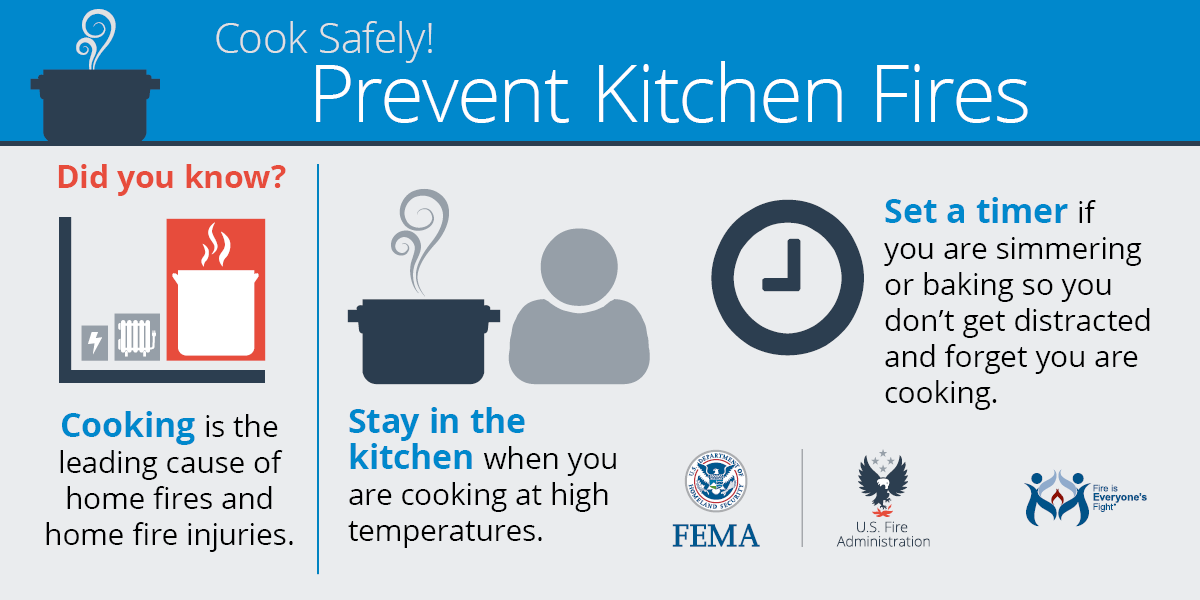
Cooking can be relaxing and fun, bringing family and friends together. But cooking is also the number one cause of home fires and home fire injuries. The good news is that most cooking fires are preventable. A few safe habits in the kitchen can go a long way toward protecting your home and family.
Cooking Fire Safety Facts
- Unattended cooking is the leading factor in home cooking fires.
- Ranges (stovetops) account for the largest share of home cooking fire incidents.
- Frying poses the greatest risk of fire.
- Two-thirds of home cooking fires start when food or other cooking materials catch fire.
- Thanksgiving is the peak day for home cooking fires.
Cooking Fire Safety Tips
- Stay in the kitchen while frying, grilling, or broiling food.
- If you are simmering, baking, or roasting food, check it regularly.
- Use a timer to remind you that you are cooking.
- Be on alert. If you are sleepy or have consumed alcohol, don’t use the stove or stovetop.
- Keep anything that can catch fire away from the stovetop—oven mitts, wooden utensils, food packaging, towels, and curtains.
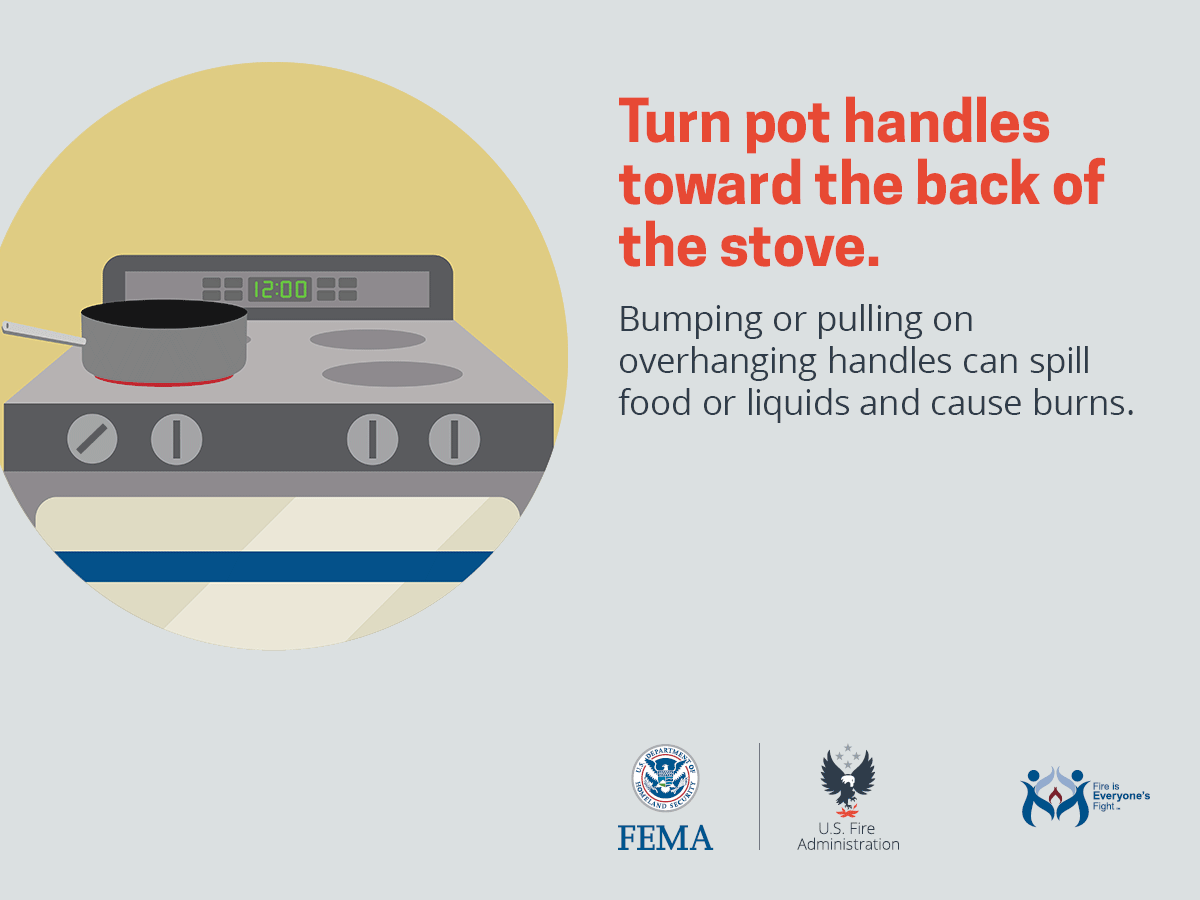
- Turn pot handles inward so they can’t be bumped or pulled down.
- Keep children and pets away from the stove by creating a 3-foot “kid-free zone.”
- Wear short sleeves or tight-fitting sleeves when cooking. Tie back long hair.
- Keep your stovetop and oven clean and free of grease buildup.
- Keep a working fire extinguisher in the kitchen area, and learn how to use it.
If a Cooking Fire Starts
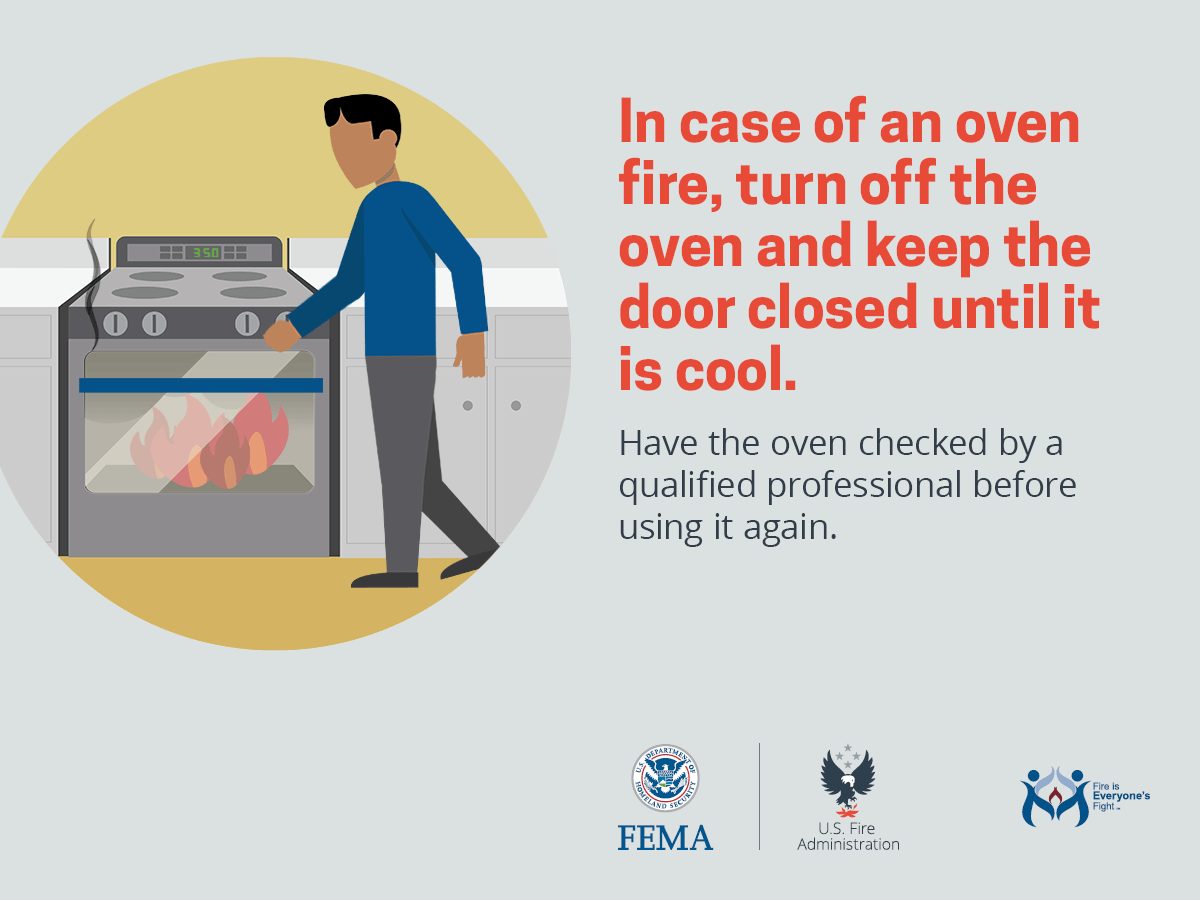
- If you can safely do so, turn off the burner.
- For a small grease fire in a pan, slide a lid or baking sheet over the pan to smother the flames. Leave it covered until it is completely cool.
- Never throw water on a grease fire. Water can cause the burning grease to spread violently.
- Never carry a burning pan—it can spill and spread fire.
If the fire is growing, there is heavy smoke, or you feel unsafe: Get everyone out, close the door behind you, and call 911.
Smoke Alarms Save Lives
Make sure your home has working smoke alarms, including one near (but not too close to) the kitchen to reduce nuisance alarms. Test alarms monthly and replace batteries as needed.
Quick Tips to Share
Share these graphics with your family and friends! We encourage you to print these and also share on social media.




Source for Content: National Fire Protection Association and U.S. Fire Administration.